


Forward:
On 23 April 2025, as a flagship event of the Shanghai Climate Week 2025, the seminar on ESG Education and Practice Evaluation Framework for Leading Asia-Pacific Business Schools was successfully held at the ESG Industry Innovation Centre in Suzhou Industrial Park. The seminar was primarily organized by the International Institute of Green Finance at Central University of Finance and Economics, The University of Manchester China Centre, the British Chamber of Commerce Shanghai, and Shanghai Green Light-Year. It was co-organised by the Suzhou Enterprise Sustainable Development Federation, UK Chapter, Suzhou Overseas Returned Scholars Association, Nanjing Centre of China Quality Certification Centre and the Cambridge University Alumni Association, UK Chapter, Shanghai Overseas Returned Scholars Association. The event was jointly supported by the UK Chapter, Shanghai Overseas Returned Scholars Association, Shanghai Pudong New District New Energy Association, Shanghai Pudong New District Women’s Talent Development Association, Suzhou Industrial Park EHS Association, Suzhou Industrial Park Green Industry Alliance Association, Suzhou Industrial Park Women Entrepreneurs Association, and the Canadian Chamber of Commerce in Shanghai.
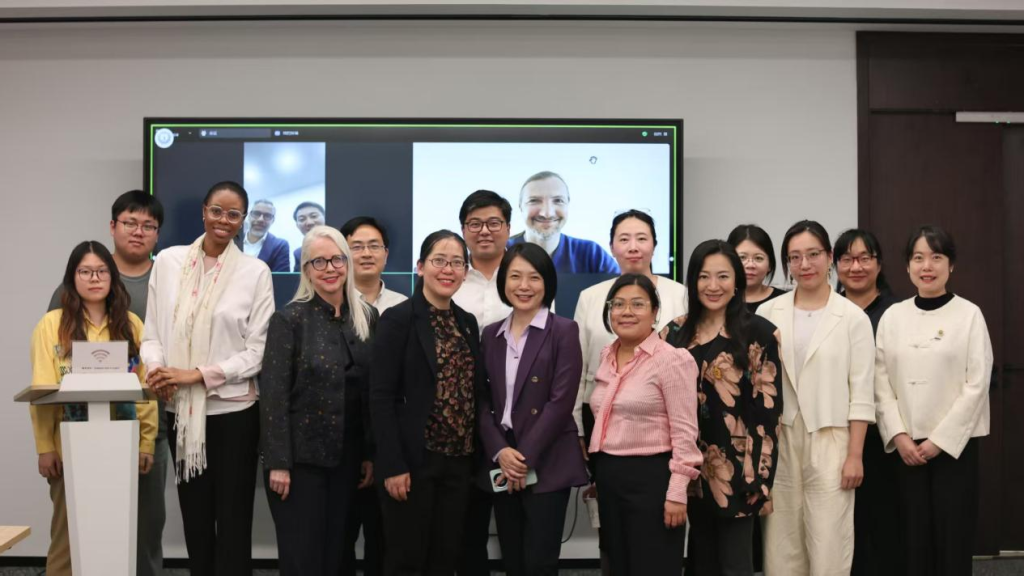
Guided by the principle of “China Action, Asian Voice, World Standard,” the seminar convened a diverse group of international and domestic experts in the ESG sector, alongside business education practitioners and industry representatives. The thematic discussions centered on critical issues such as the evaluation frameworks, practice, international standards, and capacity building for ESG education within business schools. This event marks a significant milestone in advancing innovation and practical application in ESG education across business schools in the Asia-Pacific (APAC) region.
————————
As the global sustainable development agenda rapidly advances, ESG education has emerged as an integral component of capacity building within business schools. While numerous APAC business schools have progressively incorporated ESG-related content into their academic curricula, several structural challenges remain. These include a misalignment between policy frameworks and market demands, insufficient localization of international standards, a shortage of specialized faculty, and a persistent gap between graduates’ practical competencies and market requirements. Consequently, establishing a robust, standardized ESG education evaluation system has become a practical necessity to drive the high-quality development of business education.
Mr. Gao Minxiang
Deputy Secretary-General, Suzhou Enterprise Sustainable Development Federation
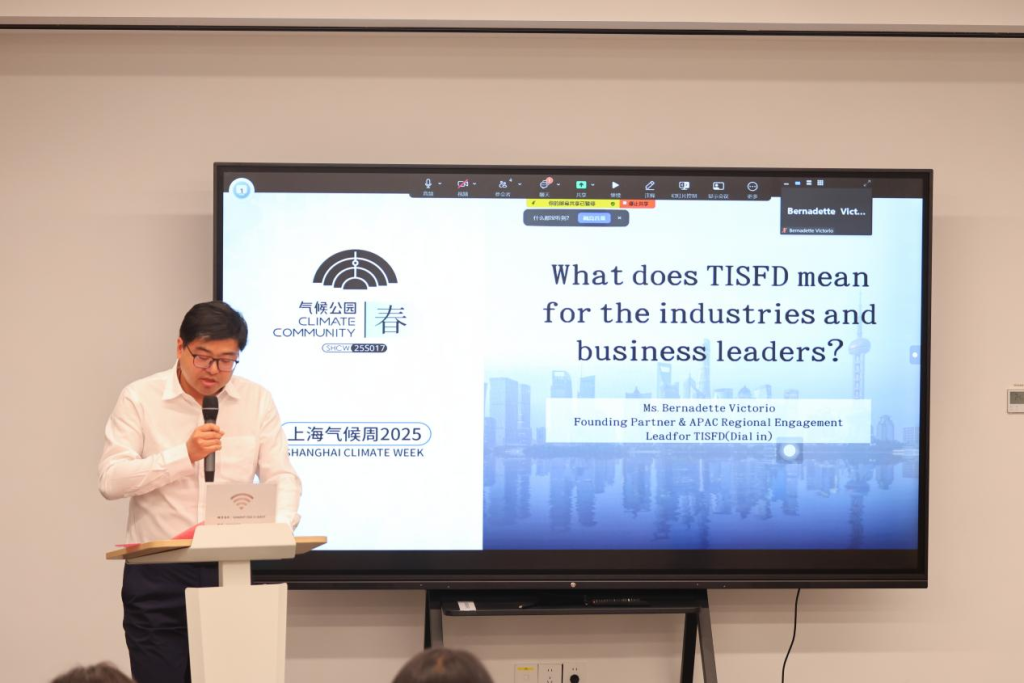
Delivering the opening remarks, Mr. Gao emphasized that ESG education serves as a foundational pillar for supporting corporate sustainability and achieving dual-carbon goals. He expressed optimism that the seminar would generate pragmatic strategies to enhance the quality and efficacy of ESG education within APAC business schools.
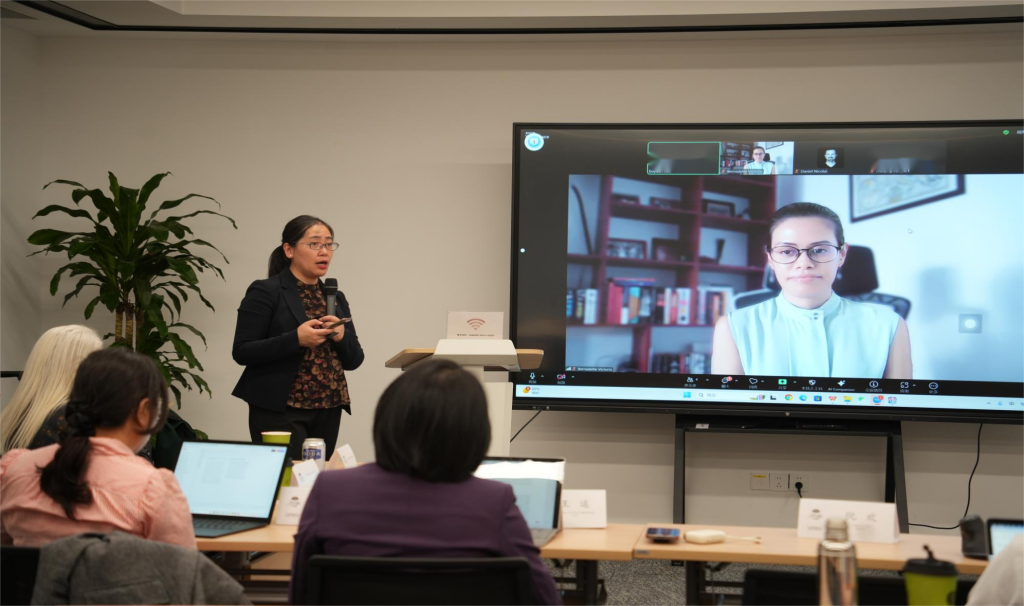
Ms. Bernadette Victorio
Asia Pacific Regional Engagement Lead, Taskforce on Inequality and Social-related Financial Disclosures (TISFD)
Ms. Victorio provided comprehensive insights into the TISFD framework, which is officially launched during the New York Climate Week 2024. She introduced TISFD focuses on corporate financial disclosures related to social inequality. She advocated for corporate leaders to proactively adopt these disclosure standards and urged academic institutions to integrate them into their curricula. This integration is designed to equip students with the analytical skills to identify social-related financial risks and foster the comprehensive competencies required to address complex global socio-environmental challenges.
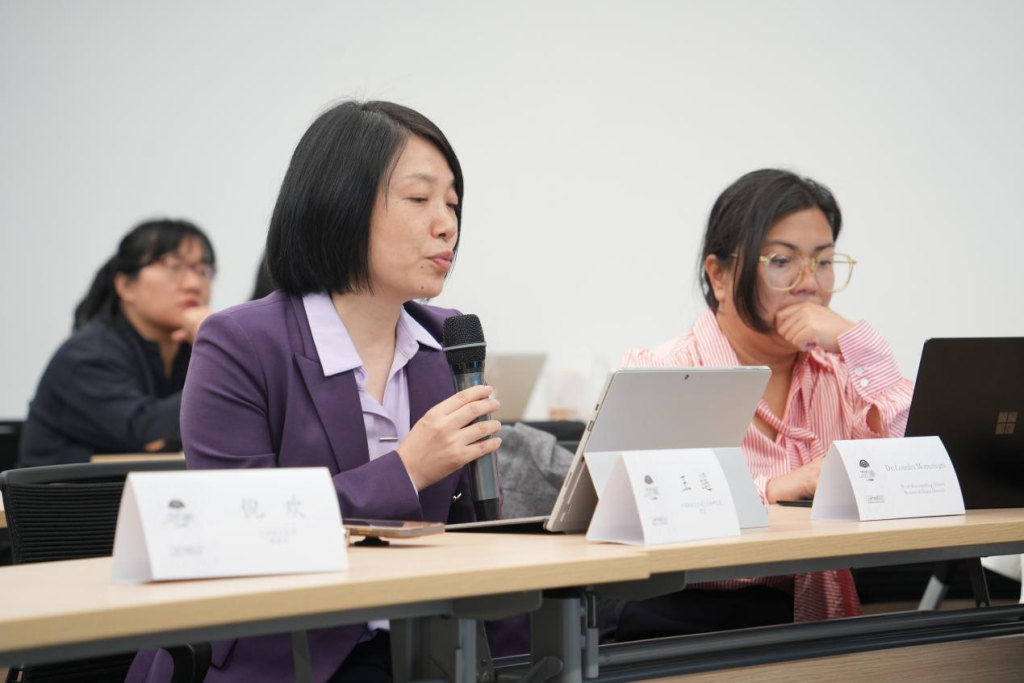
Professor Wang Yao
Dean of the International Institute of Green Finance (IIGF), Central University of Finance and Economics
Professor Wang shared strategies for seamlessly integrating internationally recognized ESG evaluation standards into business education. By introducing ESG disclosure data and performance metrics of A-share listed companies, she highlighted a positive correlation between robust ESG performance and enhanced corporate market value and revenue. She recommended that APAC business schools should incorporate global disclosure standards, such as ISSB and TCFD, into teaching methodologies to cultivate students’ global perspectives and ethical leadership. Furthermore, she shared a successful initiative offering ESG courses to middle school students in Beijing, to advocate the early integration of ESG career planning into youth education.
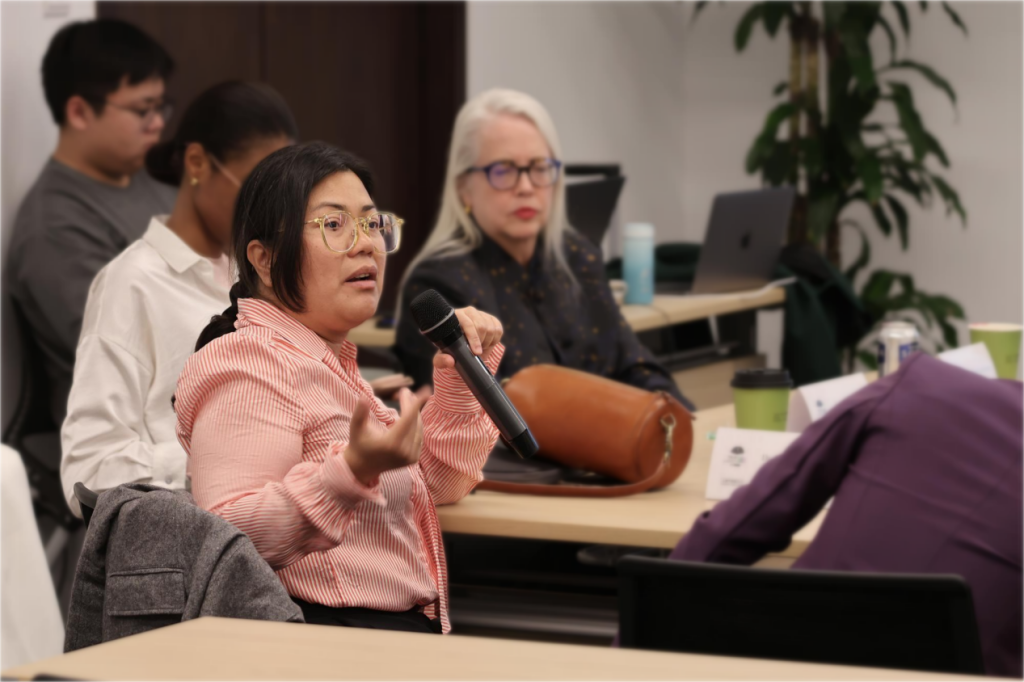
Ms. Lourdes Montenegro
Director of Research and Digisation, World Benchmarking Alliance
Ms. Montenegro introduced WBA’s comprehensive benchmark methodologies within the ESG sector and highlighted the widespread impact of industry benchmark results. She emphasized that these benchmarking methodologies provide enterprises with transparent evaluation standards, thereby accelerating global sustainable development. Additionally, these benchmark results empower companies to benchmark their industry performance and recalibrate their strategic operations to meet increasingly stringent social responsibility requirements.

Dr. Daniel Nicolai
Co-Founder of KNE and SDGs4Future
Dr. Nicolai shared valuable research and development insights from German business schools focusing on innovative educational models and CSR curricula. He articulated that innovative pedagogical approaches can significantly elevate the quality of instruction in sustainability, thereby enhancing students’ capacities to formulate solutions for global social issues.
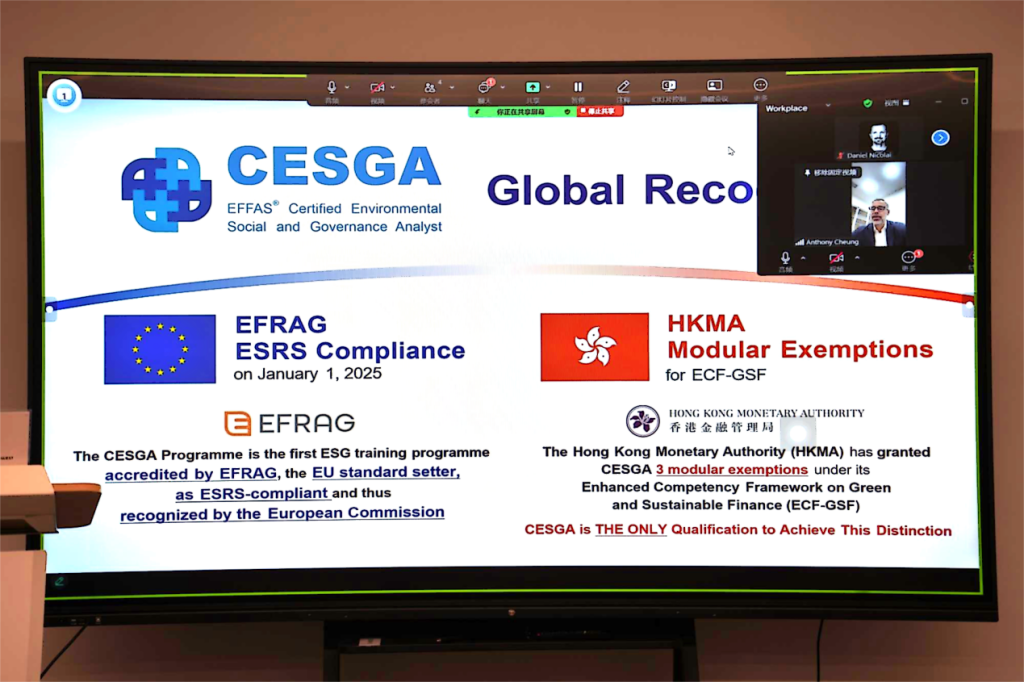
Dr. RenéNicolodi
Member of the ESG Commission of the European Federation of Financial Analysts Societies (EFFAS)
Leveraging 25 years of experience as an ESG fund manager in Europe, Dr. Nicolodi delivered a detailed overview of the Certified ESG Analyst (CESGA) program launched by EFFAS. He highlighted that this certification holds ESG training qualifications officially recognized by the EU’s European Sustainability Reporting Standards (ESRS) and has secured three module exemptions from the Hong Kong Monetary Authority (HKMA). He noted that CESGA establishes a systematic ESG knowledge framework covering investment analysis, reporting standards, and risk assessment. With over 1,800 certificate holders in China, the CESGA program offers vital infrastructural support for linking academic ESG cultivation with professional certification in the APAC region.
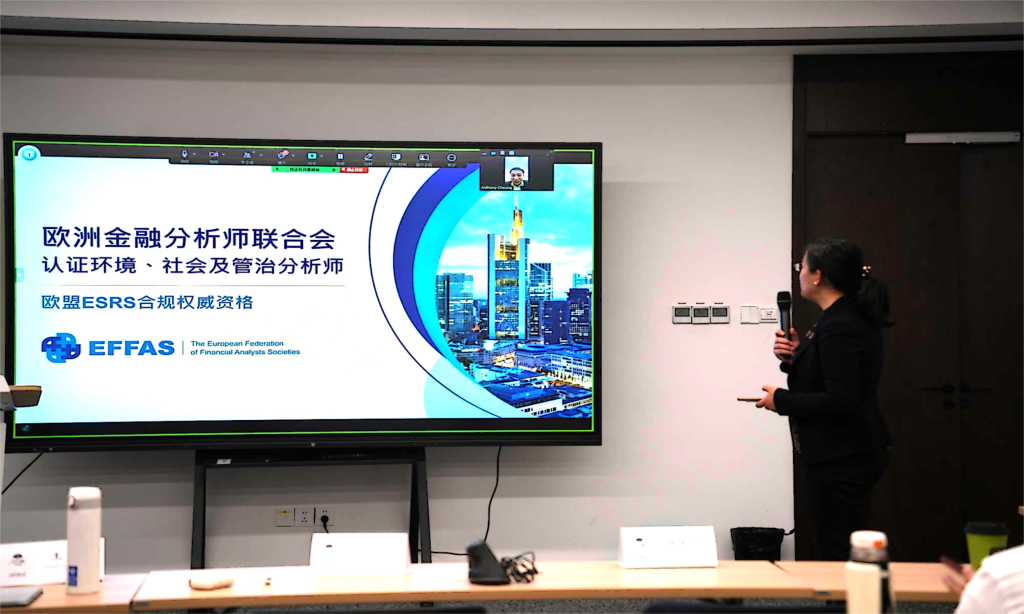
Mr. Anthony Cheung
Visiting Professor, College of Business, City University of Hong Kong
Mr. Zhang underscored the exponential demand for ESG expertise within the Chinese market. He noted that EFFAS’s CESGA program not only aligns with international ESG regulatory frameworks but also satisfies the social responsibility directives of Chinese state-owned enterprises. He proposed APAC business schools to embed authoritative international certification systems into their academic programs to help students master actionable ESG competencies and build structured pathways for career advancement.

Ms. Ling Yiwen
Representative of Sustainability Committee at the British Chamber of Commerce Shanghai
Ms. Ling discussed the design philosophy and strategic evolution of the Sustainability and Innovation Awards, hosted consecutively for three years by the British Chamber of Commerce Shanghai. The Awards are designed to incentivize corporate environmental innovation and responsible practices, utilizing selection criteria that harmonize international standards with local requirements. By establishing industry benchmarks, the awards create a demonstrative effect that encourages enterprises to continuously optimize their ESG management systems, while simultaneously bridging the gap between corporate talent needs and academic curriculum design.
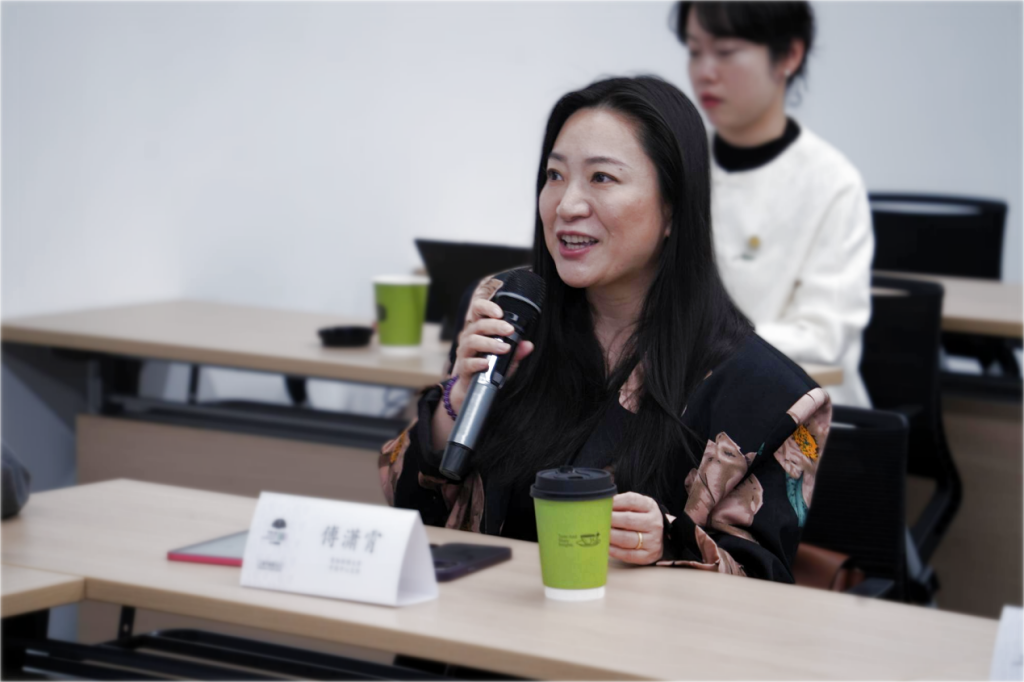
Ms. Fu Xiaoxiao
Founding Director, University of Manchester China Centre
In her keynote speech titled “The Significance of Net-Zero Commitments for Higher Education,” Ms. Fu utilized the University of Manchester as a primary case study. She outlined the university’s commitment to achieving a zero-carbon campus by 2038, detailing immersive low-carbon campus initiatives and dedicated career support for ESG-related employment. She reiterated the University of Manchester China Centre’s desires to deepening strategic cooperation with Chinese academic institutions to advance net-zero education and sustainable capacity building.
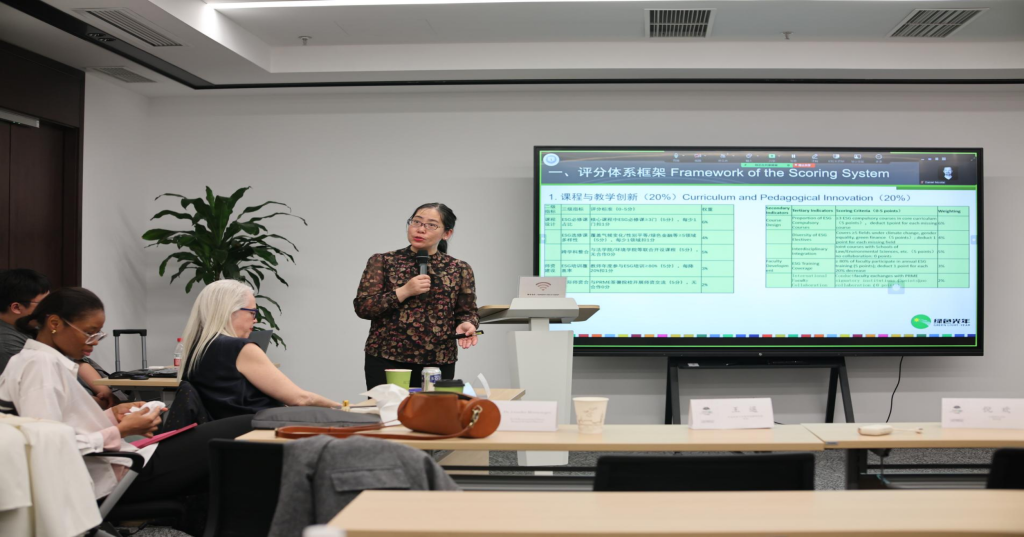
Ms. Ni Huan
Founding Director, Shanghai Green Light-Year
Ms. Ni officially released the draft of the “Evaluation Framework for the ESG Education & Practices for the Leading Business Schools in Asia and the Pacific”. Through integrating leading international evaluation systems with local needs, the framework adopts a three-tier indicator system covering seven dimensions including curriculum delivery, environmental footprint and social impact, with mechanisms for penalty deductions, innovation bonuses and regional balance. It aims to provide a scientific evaluation tool for ESG education in APAC business schools and promote exchanges and cooperation in business education within the region.
———-Special Acknowledgement——-
Primary Hosts:
主办方:
- International Institute of Green Finance (IIGF) at Central University of Finance and Economics
- University of Manchester China Centre
- British Chamber of Commerce Shanghai
- Shanghai Green Light-Year
Co-Hosts
- Suzhou Enterprise Sustainable Development Federation
- UK Chapter, Suzhou Overseas Returned Scholars Association
- Nanjing Centre of China Quality Certification Centre
- Cambridge University Alumni Association, UK Chapter, Shanghai Overseas Returned Scholars Association
Supporting Organizations:
- UK Chapter, Shanghai Overseas Returned Scholars Association
- Shanghai Pudong New District New Energy Association
- Shanghai Pudong New District Women’s Talent Development Association
- Suzhou Industrial Park EHS Association
- Suzhou Industrial Park Green Industry Alliance Association
- Suzhou Industrial Park Women Entrepreneurs Association
- Canadian Chamber of Commerce in Shanghai
Leave a Reply